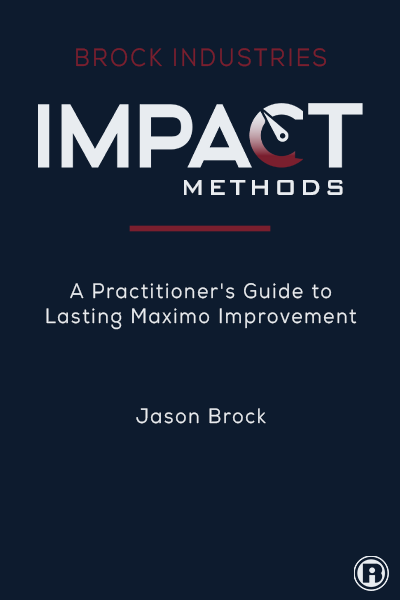
The IMPACT Method book cover
The IMPACT System — Strategic Layer

The IMPACT
Method.

Seven Disciplines That Raise the Floor.

The IMPACT Process raises the ceiling — it tells you what to do. The IMPACT Method raises the floor — it builds the organizational disciplines that keep the ceiling from collapsing. This is the strategic layer: governance, data quality, knowledge management, and the enterprise infrastructure that makes operational excellence sustainable.

PublisherBrock Industries Press
FormatPaperback + Kindle
Release2026
StatusIn Production
Built From Experience At
Deloitte IBM WMATA Battelle Pentagon NASA Celgene Kroger Cal Water Amtrak
Why the Method Exists

The Process Raises the Ceiling. The Method Raises the Floor.

Most improvement programs focus on what people should do differently. The IMPACT Method focuses on what the organization must have in place so those people can succeed. Without these seven disciplines, every process improvement eventually erodes.

What Happens Without the Method

You implement a PM program. Compliance starts strong, then drifts. Data quality degrades. New hires don't get trained. The job plans get stale. Tribal knowledge walks out the door when people leave. Two years later, you're back where you started — running another "improvement initiative" on top of the last one that didn't stick.

What Changes With It

The seven disciplines create the organizational infrastructure that makes operational improvements permanent. Data stays clean because Data Governance is a discipline, not a project. Knowledge transfers because Knowledge Management has a system. The platform stays current because Platform Lifecycle Management has a governance cadence. The floor stops dropping out.

The IMPACT Process

Raises the ceiling. Tells the organization what to do. Seven operational steps executed cycle after cycle.

+

The IMPACT Method

Raises the floor. Builds the disciplines that keep the ceiling from falling. Seven strategic disciplines maintained continuously.

The Seven Disciplines

Enterprise Infrastructure for Operational Excellence

Each discipline is a standing capability, not a one-time project. Together they form the organizational foundation that the IMPACT Process depends on.

01

Value Chain Mapping

Understand how maintenance activities connect to business outcomes. Map asset criticality to operational value. Without this, every work order has equal priority — which means nothing is actually prioritized.

02

Data Governance

The discipline that makes every other discipline possible. Asset hierarchies, location taxonomies, failure codes, PM templates — if your data is unreliable, your KPIs are fiction and your decisions are guesses.

03

Business Process Mapping

Document how work actually flows through the organization — not how the org chart says it should. Map the real handoffs, approval chains, and decision points. Then design the process you want and close the gaps.

04

Platform Lifecycle Management

Your EAM platform is infrastructure, not a finished product. Patch cycles, upgrade planning, configuration governance, environment management. If the platform drifts, everything built on it drifts with it.

05

Training & Competency

Role-based training tied to process steps, not generic system walkthroughs. Planners learn planning workflows. Technicians learn field data capture. Supervisors learn governance dashboards. Everyone learns their part of the system.

06

Knowledge Management

Capture, structure, and make accessible the operational knowledge that lives in people's heads. Failure libraries, decision rationale, lessons learned. When someone leaves, their knowledge should stay.

07

Information Architecture

The structural blueprint for how data, documents, dashboards, and reports connect across the organization. Who sees what, where it lives, how it flows. The discipline that keeps everything findable, governed, and connected.

How the Two Layers Work Together

The Method Supports Every Step of the Process

Each IMPACT Process step depends on one or more Method disciplines. You can't Measure (Step 2) without Data Governance. You can't Align (Step 4) without Business Process Mapping. You can't Transform (Step 7) without Knowledge Management. The Method is not optional — it is load-bearing.

Identify + Value Chain Mapping

Asset criticality rankings from Value Chain Mapping drive work identification priorities. You identify the right work because you know which assets matter most.

Measure + Data Governance

KPI baselines are only as trustworthy as the data behind them. Data Governance ensures the numbers you're measuring against are clean, consistent, and defensible.

Plan + Platform Lifecycle

PM programs, job plans, and scheduling live in the platform. If the platform isn't governed, maintained, and current, your planning foundation is unstable.

Align + Business Process Mapping

Organizational alignment requires knowing how work actually flows. Process maps expose the handoff gaps, approval bottlenecks, and ownership ambiguities that block alignment.

Control + Training

Execution discipline depends on people knowing their role in the process. Role-based training tied to specific process steps is what turns governance into daily practice.

Transform + Knowledge Mgmt

Continuous improvement requires institutional memory. Knowledge Management captures what worked, what failed, and why — so each improvement cycle starts smarter.
Forthcoming

The IMPACT Method
Is Coming in 2026.

The strategic layer of the IMPACT System — seven disciplines for enterprise operational excellence. Be the first to know when it launches.